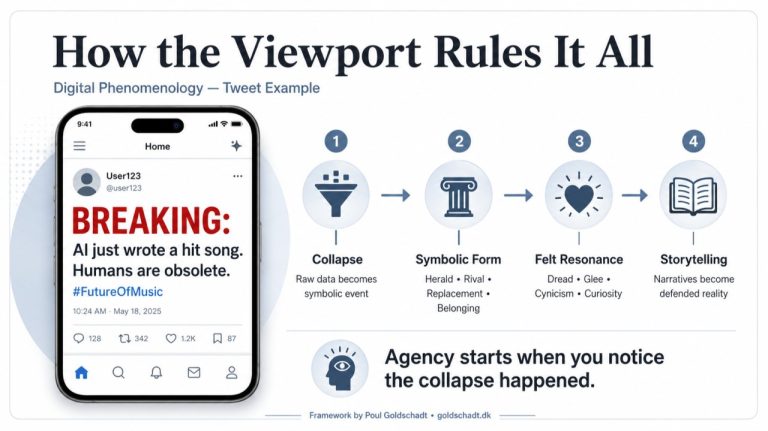
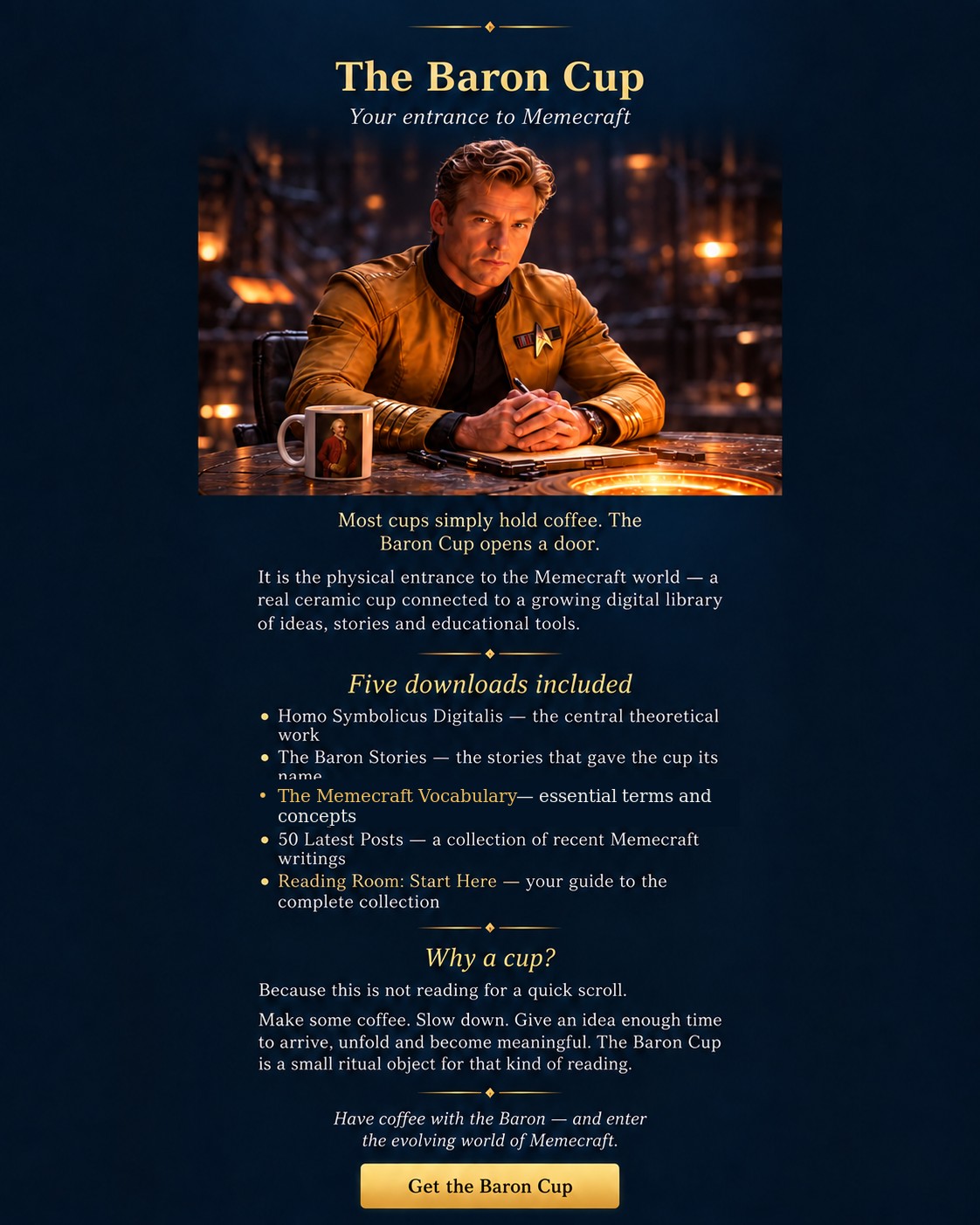
Memecraft: Symbolic Literacy in the Age of AI
Memecraft is an innovative educational framework designed to foster symbolic literacy and critical thinking in an era dominated by artificial intelligence. Rather than relying on automated answers, the system encourages students to use a digital workstation containing various specialized modules to analyze, question, and interpret complex data. This process involves testing information through multiple lenses—such as nonsense detectors and symbolic interpreters—to identify weak arguments or hidden metaphors. By comparing these diverse readings, learners develop the skills necessary to navigate digital phenomenology and media ambiguity. The ultimate goal of the curriculum is the creation of a Field Report, where students document their intellectual journey and take personal responsibility for their conclusions. Ultimately, this method transforms passive AI consumption into an active authorship process that prioritizes human judgment and deep understanding.
What are the specific roles of the different workstation modules?
The Memecraft Workstation features six distinct modules that function as specialized lenses for analyzing material:
- Symbolic Interpreter: Reads images, scenes, stories, and phrases for metaphor, tension, archetype, and symbolic meaning[1].
- MoMo / Nonsense Detector: Tests clarity and helps define where metaphor ends and actual explanation begins[2].
- Baron Verdict: Applies pressure to vague claims, inflated tone, weak arguments, and symbolic bluff to incorporate critical resistance into interpretation[2][3].
- Graph Lab: Maps conceptual structure to highlight elements like center, echo, bridge, hole, and signal[2].
- Gap Lab: Helps locate what is missing, weakly supported, unresolved, or unclear in the material[2].
- Meaning Lab: Supports interpretation, reformulation, reflection, and building stronger authored expression[2].
How does the Graph Lab map structure?
The Graph Lab maps conceptual structure by helping learners analyze key structural elements and relationships within a text, image, or idea[1][2]. It visualizes five primary structural components:
- Center: The central focus or core concept[2].
- Echo: Recurring themes, motifs, or repeated ideas[2].
- Bridge: Connections and transition points linking different concepts together[2].
- Hole: Gaps, missing information, or unresolved structural areas[2].
- Signal: The main takeaway or prominent message within the material[2].
By mapping these structural features, the module helps students trace connections, evaluate how ideas relate, and see the overall framework of the material[1][2].
The Graph Lab and Gap Lab work together by moving from structural mapping to targeted interrogation:
- Graph Lab Locates Structural “Holes”: As the Graph Lab maps out the architecture of a text or concept—tracking its center, echoes, bridges, and signals—it highlights structural holes, revealing where connections, transitions, or logical framework links are missing[1].
- Gap Lab Analyzes What is Missing: Once a structural hole is identified, the Gap Lab examines what is specifically absent, weakly supported, unresolved, or unclear within that gap[1].
- Formulating Critical Questions: By pairing Graph Lab’s structural layout of where a break occurs with Gap Lab’s inquiry into what is missing, students can pinpoint exact logical flaws and formulate clear, unresolved questions[1].
This combined process feeds directly into Section IV of the Field Report (“What remains uncertain — and what I stand behind”), prompting learners to explicitly document open questions rather than smoothing over gaps in logic[2].
Bringing in the Baron Verdict introduces critical resistance and editorial judgment once structural gaps have been identified[1]:
- Testing Explanations Against “Bluff”: While the Graph Lab maps structural “holes” and the Gap Lab identifies what is missing or unresolved[2], the Baron Verdict applies pressure to any tentative explanations, challenging vague claims, inflated tone, weak arguments, and symbolic bluff[2][3].
- Asking “Does It Hold?”: Rather than asking only what a text or idea means, the Baron Verdict shifts the question to whether the argument actually holds under critical pressure[1].
- Enforcing Intellectual Honesty: If an explanation cannot withstand the Baron’s critique, the student cannot simply smooth over the flaw[1][3]. They must either strengthen the argument or explicitly document the point as unresolved in Section IV of the Field Report (“What remains uncertain — and what I stand behind”)[3].
By combining these three lenses, students move from mapping structure (Graph Lab)[2] and finding missing pieces (Gap Lab)[2] to stress-testing their own reasoning (Baron Verdict)[3], ensuring the final report reflects genuine judgment rather than passive assumptions[4][5].
The Symbolic Interpreter, MoMo / Nonsense Detector, and Meaning Lab provide the interpretive depth and clarity checks that balance the structural and critical modules[1][2]:
- Symbolic Interpreter (Unpacking Meaning): Reads images, scenes, stories, and phrases for metaphor, tension, archetype, and symbolic meaning[1]. It serves as the exploratory lens that surfaces underlying figurative layers and thematic connections[1].
- MoMo / Nonsense Detector (Establishing Boundaries): Tests clarity and helps students establish where metaphor ends and actual explanation begins[2]. It prevents decorative phrasing or loose analogies from being passed off as clear explanations[2].
- Meaning Lab (Refining Authored Expression): Supports interpretation, reformulation, reflection, and building stronger, more articulate authored expression[2].
Completing the Evaluation Loop in the Field Report
By comparing how these creative and clarification lenses read material alongside the structural modules (Graph Lab and Gap Lab) and critical pressure (Baron Verdict), students construct a multi-dimensional trail of thought[2][3]:
- Section I (What I observed and interpreted): Captures the initial symbolic read and narrative themes surfaced by the Symbolic Interpreter and Meaning Lab[1].
- Section II (What tools I used and what they revealed): Documents specific clarity tests from MoMo alongside structural findings from the other tools[2][4].
- Section III (How different modules read the same material): Compares contrasting readings—such as where a Symbolic Interpreter sees deep metaphor while MoMo or Baron Verdict flags a lack of literal explanation[1].
This full cycle ensures students transition from passive AI consumption to active, multi-lens evaluation and grounded personal reflection[1][5].
Here is an example of analyzing a single statement: **”AI is a universal bridge connecting all human knowledge into a single global mind.”**[1]
Here is how that material moves through all six workstation modules[1]:
- Symbolic Interpreter (Metaphor & Archetype): Reads the phrase for mythic themes[2]. It identifies “universal bridge” as an archetype of unity, highlighting the tension between human fragmentation and technical connection[2].
- MoMo / Nonsense Detector (Clarity Check): Tests where metaphor ends and literal explanation begins[3]. It flags “single global mind” as a decorative metaphor that fails to explain how communication actually occurs[3].
- Graph Lab (Structural Mapping): Maps the conceptual layout—setting AI as the center and human knowledge as the bridge, while marking a structural hole where the practical mechanism is assumed rather than demonstrated[3].
- Gap Lab (Locating Missing Information): Pinpoints what is missing within the hole identified by Graph Lab[3]. It highlights that crucial issues—such as language barriers, algorithmic bias, and digital access—are completely absent[3].
- Baron Verdict (Critical Pressure): Challenges the statement’s inflated tone and symbolic bluff, demanding to know whether such an all-encompassing claim actually holds under scrutiny[3][4].
- Meaning Lab (Authored Reformulation): Guides the student in reflecting on these contrasting readings to reframe the statement into a nuanced, well-articulated conclusion[3].
Synthesizing into the Field Report
The student documents this multi-lens process across the four sections of their Field Report[4][5]:
- Section I (What I observed and interpreted): Captures the initial archetype of digital unity revealed by the Symbolic Interpreter[2][4].
- Section II (What tools I used and what they revealed): Records Graph Lab’s structural map and MoMo’s distinction between metaphor and explanation[3][4].
- Section III (How different modules read the same material): Contrasts the Symbolic Interpreter’s poetic reading with the Baron Verdict’s rejection of symbolic bluff[2].
- Section IV (What remains uncertain — and what I stand behind): Lists the unaddressed gaps flagged by Gap Lab as open uncertainties, concluding with a grounded statement the student takes personal responsibility for[3].
The Memecraft workstation modules and framework components can be grouped into four functional categories based on how they are used during analysis:
1. Exploratory & Symbolic Interpretation (Unpacking Figurative Content)
- Symbolic Interpreter: Unpacks images, scenes, stories, and phrases to surface metaphor, tension, archetype, and symbolic meaning[1].
- Meaning Lab: Facilitates deeper interpretation, reformulation, reflection, and building articulate authored expression[2].
2. Structural & Spatial Mapping (Analyzing Architecture & Identifying Gaps)
- Graph Lab: Maps conceptual structure by laying out elements such as center, echo, bridge, hole, and signal[2].
- Gap Lab: Pinpoints structural weaknesses by locating what is missing, weakly supported, unresolved, or unclear[2].
3. Critical Verification & Editorial Resistance (Testing Rigor & Clarity)
- MoMo / Nonsense Detector: Tests clarity and helps distinguish where figurative metaphor ends and literal explanation begins[2].
- Baron Verdict: Applies critical pressure to vague claims, inflated tone, weak arguments, and symbolic bluff to test whether an argument holds[2].
4. Authored Synthesis & Accountability (Documenting & Owning Conclusions)
- Field Report: Functions as the primary accountability instrument, where students record their multi-lens process and take personal ownership of their final conclusions[3][5] across four structured sections:
- Section I: What I observed and interpreted[3]
- Section II: What tools I used and what they revealed[3]
- Section III: How different modules read the same material[3]
- Section IV: What remains uncertain — and what I stand behind[3]
The field report
The Field Report is the final accountability deliverable in Memecraft, serving as the document where students transition from exploring AI output to establishing authored learning and taking personal responsibility for their conclusions[1]. Rather than presenting a borrowed answer, the report provides a transparent “trail of thought” showing how the learner observed, questioned, and compared material across different workstation modules[1].
Core Purpose & Ownership
The report centers around the foundational declaration “I own this because…”, requiring students to demonstrate personal judgment, selection, and responsibility rather than relying on passive AI generation[3][5].
Structure of the Field Report
The Field Report is organized into four structured sections[5]:
- Section I: What I observed and interpreted — Records initial observations, primary themes, and symbolic readings of the material[5].
- Section II: What tools I used and what they revealed — Outlines the specific workstation modules applied during the investigation and the findings each tool produced[5].
- Section III: How different modules read the same material — Compares contrasting interpretations across the various analytical lenses[4][5].
- Section IV: What remains uncertain — and what I stand behind — Identifies open questions, unverified claims, or unresolved gaps, while clearly stating the final conclusions the student is prepared to defend[3][5].
Here are three structured classroom exercise designs built directly around the four-step Memecraft teaching method (starting with a core stimulus, holding a class discussion, testing across modules, and producing a Field Report)[1]:
1. The “Metaphor vs. Reality” Stress Test
- Focus Lenses: Symbolic Interpreter + MoMo / Nonsense Detector[2][3]
- Stimulus: An AI-generated essay, corporate press release, or speech rich in elevated language.
- Exercise:
- Unpack Metaphor: Students pass the text through the Symbolic Interpreter to identify archetypes, symbolic language, and figurative themes[2].
- Test Clarity: Students then run the same text through MoMo to strip away decorative phrasing and pinpoint exactly where metaphor ends and literal explanation begins[3].
- Learning Outcome: Students learn to distinguish between decorative fluff and actual substance, seeing how grand metaphors can obscure a lack of explanation[3][4].
2. The Structural Blueprint & Gap Audit
- Focus Lenses: Graph Lab + Gap Lab[3]
- Stimulus: A complex opinion piece, historical argument, or scientific thesis.
- Exercise:
- Map Architecture: Students use Graph Lab to map the core elements—identifying the Center, Bridges, and Signals[3].
- Audit Gaps: Where Graph Lab flags structural Holes, students use Gap Lab to list what is missing, weakly supported, or unresolved[3].
- Learning Outcome: Shifts students from accepting a smooth summary to actively diagnosing logical gaps and missing evidence[4][5].
3. “The Baron’s Court” (Editorial Defense)
- Focus Lenses: Baron Verdict + Meaning Lab + Field Report[3]
- Stimulus: A student’s own draft or an AI-generated conclusion on a controversial topic.
- Exercise:
- Apply Critical Pressure: Students subject their claim to the Baron Verdict, which challenges vague claims, inflated tone, and symbolic bluff[3].
- Draft the Defense: In Meaning Lab, students refine their position based on the critique[3].
- Establish Ownership: Students write Section IV of their Field Report, explicitly logging what remains uncertain while writing their final statement under the declaration: *”I own this because…”*[5][6].
- Learning Outcome: Teaches students to embrace editorial resistance and take personal responsibility for their final arguments rather than turning in borrowed answers[1].
Here is how the Memecraft workstation modules apply to a visual theme or image, using a common AI visual motif as a concrete example[1][2]:
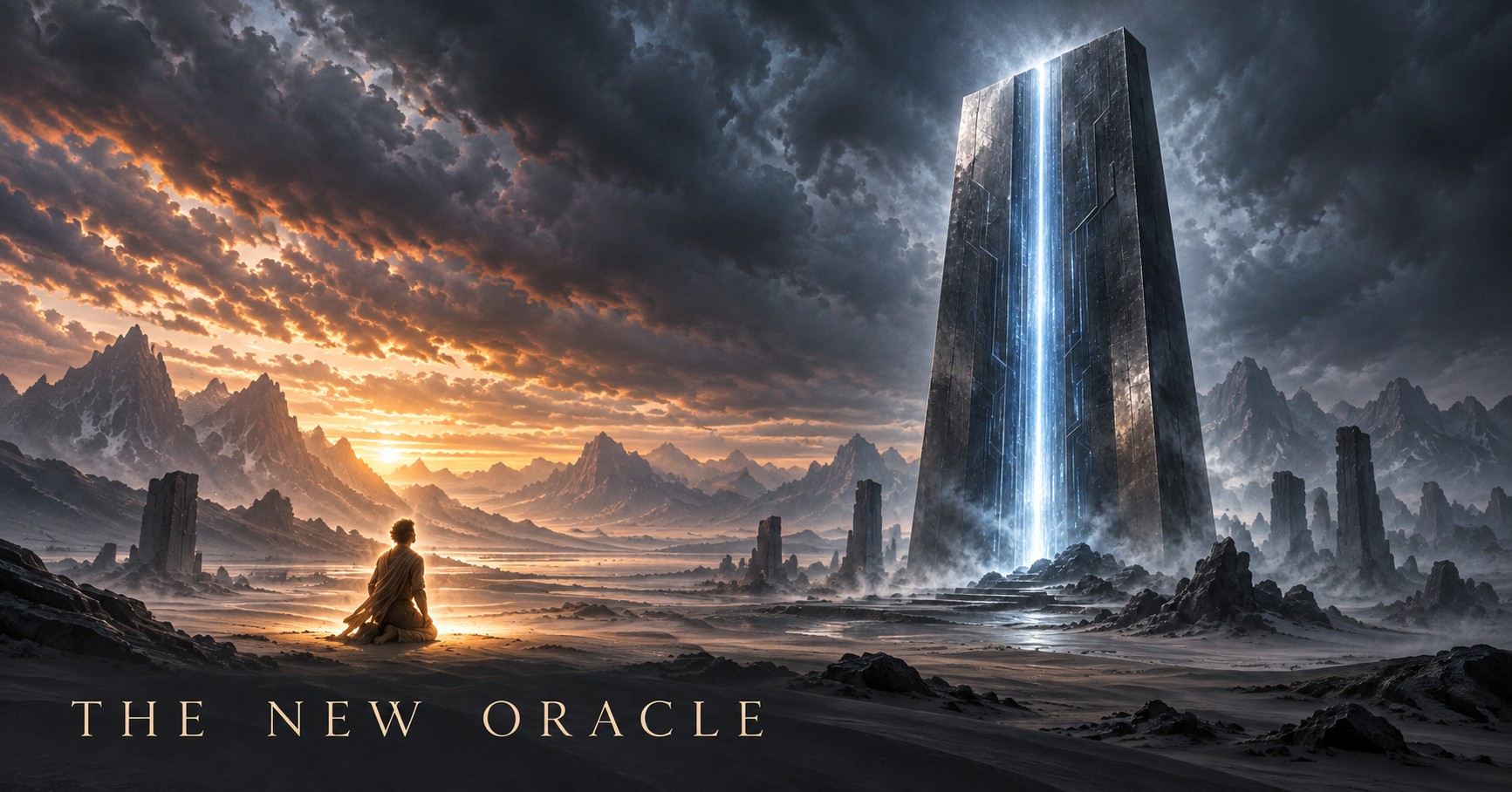
Image / Visual Theme Under Evaluation: A artwork depicting a glowing human silhouette kneeling in awe before a towering, metallic AI monolith in a desolate landscape, captioned “The New Oracle.”
Testing the Image Across the Six Workstation Modules
- Symbolic Interpreter (Metaphor & Archetype): Reads the visual scene for archetype and metaphor[2]. It identifies the archetype of divine revelation—framing the monolith as a sacred altar and the kneeling human as a devoted worshiper. It surfaces the visual tension between organic submission and technological authority[2].
- MoMo / Nonsense Detector (Clarity Check): Tests where visual metaphor ends and actual explanation begins[3]. It flags the glowing light and dramatic landscape as aesthetic bluff, pointing out that sci-fi imagery obscures the functional reality of server farms, algorithms, and human data inputs[3].
- Graph Lab (Structural Mapping): Maps the visual composition and spatial layout[3]:
- Center: The towering monolith (AI)[3].
- Signal: A message of technological transcendence and human powerlessness[3].
- Bridge: The beam of light connecting the monolith and figure[3].
- Hole: The complete visual absence of human software engineers, hardware infrastructure, or material labor[3].
- Gap Lab (Locating Missing Elements): Pinpoints what is omitted or unresolved within the visual “hole”[3]. It highlights that critical realities—such as energy consumption, algorithmic bias, copyright, and human governance—are entirely missing from this mythologized portrait[3].
- Baron Verdict (Critical Pressure): Challenges the image’s dramatic tone and symbolic bluff[3][4]. The Baron asks: *”Is AI genuinely an all-knowing oracle, or is this image selling techno-religious hype to distract from human responsibility?”*[4]
- Meaning Lab (Authored Reformulation): Guides the student in reframing the visual narrative into a clear, critical reflection[3]: *”The image relies on religious iconography to mythologize computation, disguising human engineering as divine authority.”*[3]
Synthesized Field Report Structure
Following the evaluation, the student documents their findings in the four-section Field Report anchored by the core declaration **”I own this because…”**[4][5]:
- Section I: What I observed and interpreted — Records the initial visual impressions, divine archetypes, and symbolic themes of technological reverence[4].
- Section II: What tools I used and what they revealed — Outlines Graph Lab’s visual composition map alongside MoMo’s separation of sci-fi aesthetics from functional reality[4].
- Section III: How different modules read the same material — Contrasts the Symbolic Interpreter’s reading of sacred awe with the Baron Verdict’s rejection of visual hype[4].
- Section IV: What remains uncertain — and what I stand behind — Logs unaddressed realities (energy use, bias, human agency) as open gaps, concluding with an authored statement the student takes personal responsibility for[4].
Peer review of Memecraft Field Reports can be structured directly around the report’s four core sections, turning peers into critical editors who test whether an argument holds[1][2].
1. Section I Review: Observation & Interpretation Check
- Goal: Evaluate the initial read of the text or image[1].
- Peer Questions:
- Did the author clearly articulate what they observed and interpreted[1]?
- Did they identify genuine archetypes, metaphors, or symbolic themes, or did they rely on vague generalities[1][3]?
2. Section II Review: Workstation Tool Audit
- Goal: Verify that workstation modules were applied effectively rather than passively[1][4].
- Peer Questions:
- Which specific tools were used, and did they yield actual analytical insights[1][5]?
- Did tools like MoMo successfully separate metaphor from literal explanation, or did Graph Lab accurately locate structural centers and bridges[5]?
3. Section III Review: Comparative Lens Evaluation
- Goal: Ensure the report actively compares contrasting readings across modules[1].
- Peer Questions:
- Does the report contrast how different modules read the same material—such as comparing the Symbolic Interpreter’s thematic read against the Baron Verdict’s critical pressure[1]?
- Did the author synthesize these contrasting views, or did they merely list tool outputs side by side[7][8]?
4. Section IV Review: The “I Own This Because…” Audit
- Goal: Test personal ownership, accountability, and unresolved gaps[1][8].
- Peer Questions:
- Did the author explicitly document what remains uncertain or unresolved, as flagged by tools like Gap Lab[1][5]?
- The Ultimate Test: Does the author’s final claim hold up under scrutiny, and can they defend their core declaration: **”I own this because…”**[1][2]